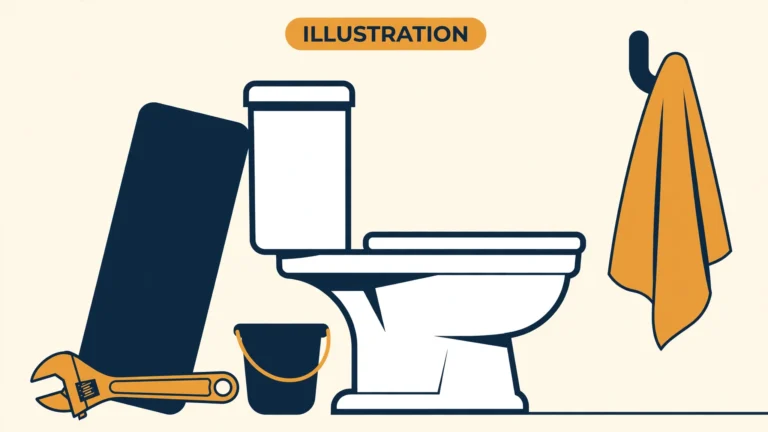
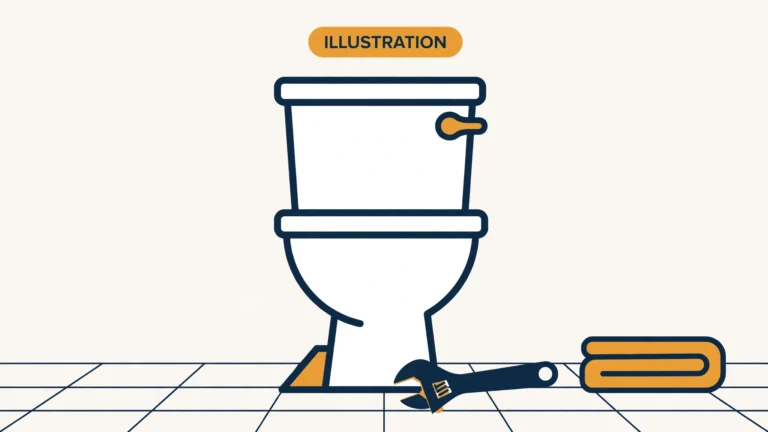
Quick answer: Push the toilet side to side at the base: if it moves, it’s loose. Pop the caps and snug the closet bolts a quarter-turn at a time, alternating sides; wedge shims under the low side and caulk around the base, leaving the back open. Only pull the toilet and replace the wax ring…
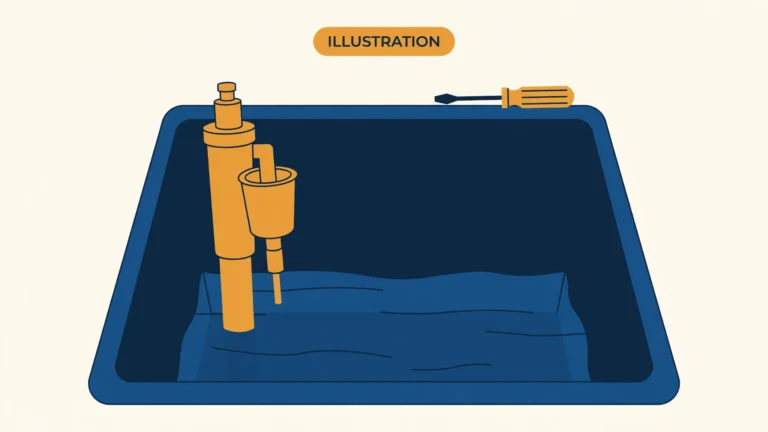
Quick answer: Pop the tank lid and find the fill valve on the left. Set the float so the water shuts off about ½ to 1 inch below the top of the overflow tube, or at the “Water Line” mark molded inside the tank. Float-cup screw: small turn, flush, watch; float-cup clip: squeeze and slide;…
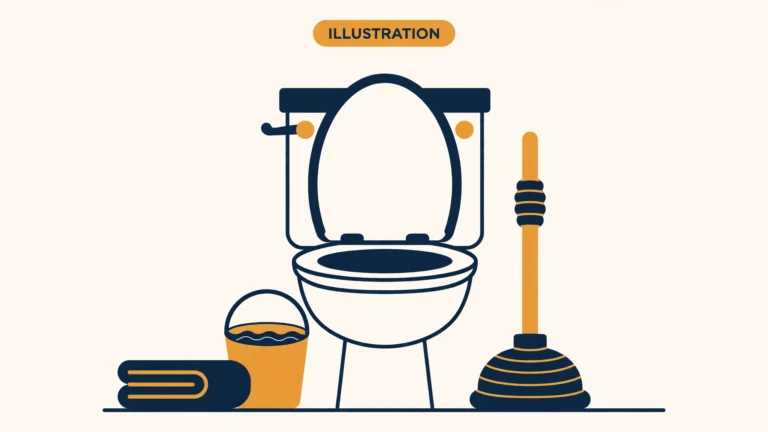
Quick answer: Before you touch a tool, run the bucket test: pour a bucket of water into the bowl, fast. If it drains normally, your problem is in the tank — not a clog. If the water rises and sits there, it’s a blockage — plunge with a flange plunger; stop and call a plumber…
Quick answer: A flapper swap is a $5–12 part and ten minutes of work. The part everyone gets wrong is buying: measure the flush valve seat (the drain opening in the tank bottom) — roughly 2″ or 3″ — not the old flapper, which warps. Snap the new flapper onto the valve pegs, and set…
Quick answer: A running toilet is almost always one of three things: a chain holding the flapper open, a worn flapper that won’t seal, or a fill valve that never shuts off. Three tests — jiggle the handle, watch the overflow tube, drop food coloring in the tank — tell you which one in under…
Quick answer: Most fixture-level repairs — running toilets, dripping faucets, slow drains, loose P-traps — are DIY-friendly, cost $5–30 in parts, and take under an hour. Anything behind a wall, anything involving gas, and anything your city requires a permit for belongs to a licensed plumber. This guide shows where that line is, what each…