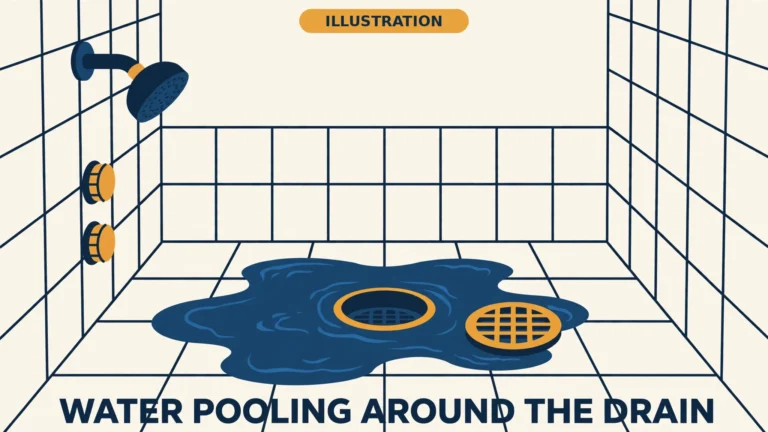
How to Unclog a Shower Drain Quick answer Most shower drains clog with hair and soap at the strainer, and a $5 plastic zip tool clears them in five minutes. Diagnose first: a slow drain is local, standing water means a plug at the trap, and several fixtures failing together is a vent or main-line…
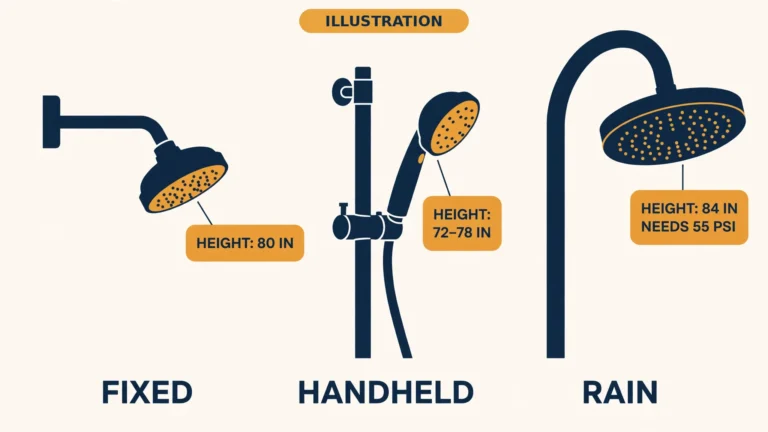
How to Replace a Shower Head Quick answer A new shower head is a 15-minute swap on a standard 1/2-inch fitting — if you pick the right one first. Match the head to your water pressure and your height, not just the price tag. A rain head needs 55 pounds of pressure and 84 inches…
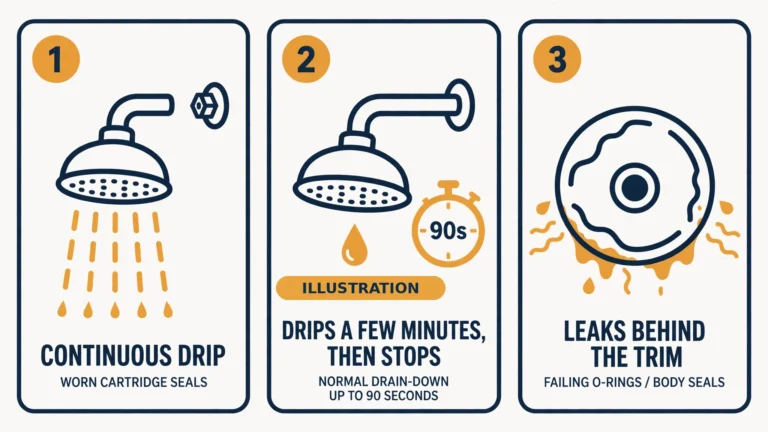
Quick answer Most leaking shower heads are a $2 washer, a loose connection, or mineral buildup — not a new fixture. Dry everything, run the shower for 15 seconds, turn it off, and watch where the water appears. That tells you the fix in under a minute — and if the drip keeps going minutes…
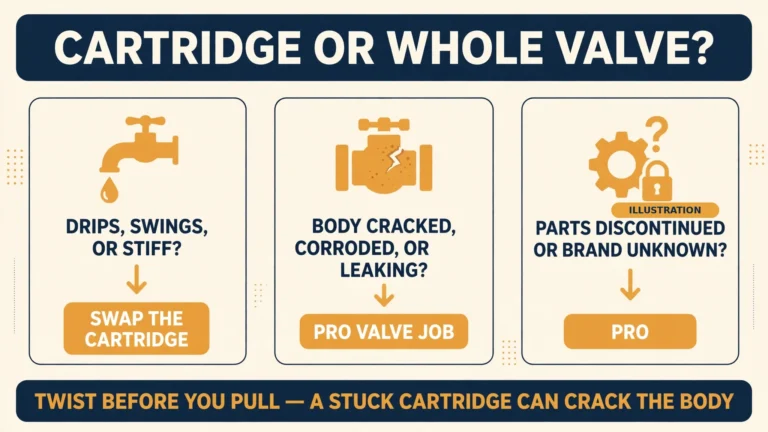
Quick answer A shower that drips after shutoff is almost always the cartridge — the part inside the valve that shuts the water off. Match the part by brand before you buy: the wrong cartridge will not fit, and the right one swaps out from the front in under an hour. If the drip survives…
Quick answer Most shower valve problems end at the cartridge — the small part inside the valve that mixes hot and cold. A cartridge swap takes an hour or so, needs no permit, and costs a fraction of a full valve job. Only replace the whole valve body when it is cracked, corroded, or out…
Quick answer Old caulk fails because water, soap film, or the wrong product got underneath it, and new caulk laid over that mess fails the same way. Strip the old bead out completely, clean the joint with rubbing alcohol, let it dry, and lay one steady bead of 100% silicone. Then leave the tub alone…
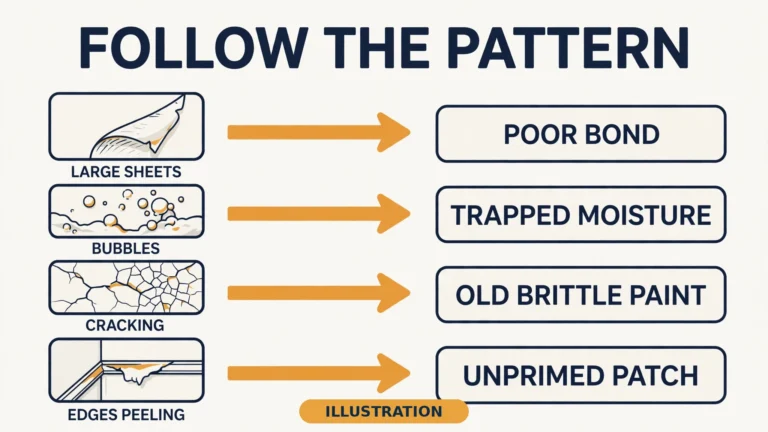
Quick answer Peeling paint is a symptom, not the problem — find the cause first. Moisture, bad prep, or the wrong primer cause most peels, so fix that before you open a paint can. Then scrape back to firm paint, feather the edges, prime for the cause, and repaint in two thin coats — skip…
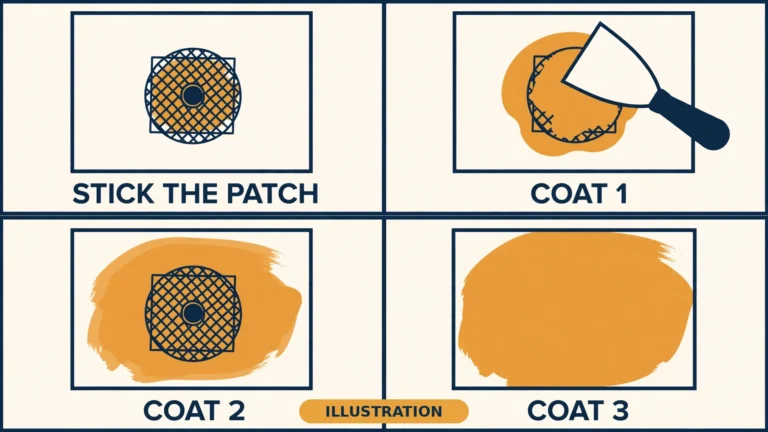
Quick answer Patch a drywall hole by matching the method to the size. Spackle handles nail holes, a mesh patch covers holes up to a few inches, and anything bigger needs a California patch or a cut-in piece with wood backing. The patch itself is quick work — thin coats, full drying time, primer, and…
Quick answer: Most drywall damage is a cheap DIY fix. A nail hole needs only spackle, a doorknob hole takes a mesh patch or California patch, and holes wider than six inches need a cut-in piece with backing. Primer and texture are what people miss: bare compound leaves a dull spot called flashing, and a…
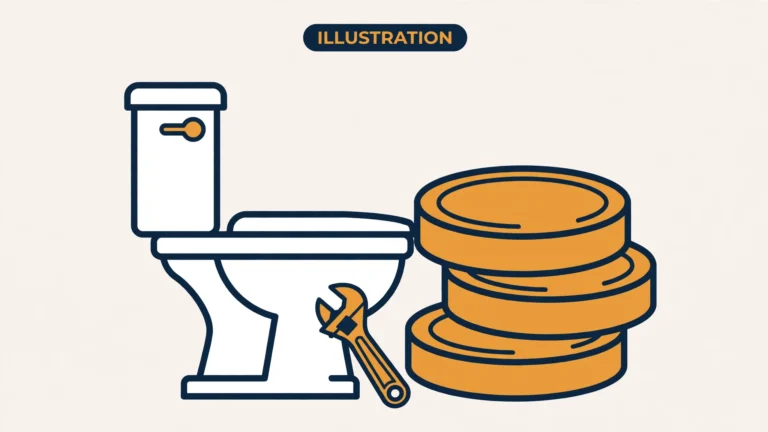
Quick answer: A running toilet costs $0–25 to fix yourself or $100–400 for a plumber visit (2026, US). The DIY number depends on the diagnosis: a tangled chain or bad water level is free, a flapper is $5–12, a fill valve is $8–25. And the leak is costing you: a running toilet can waste up…